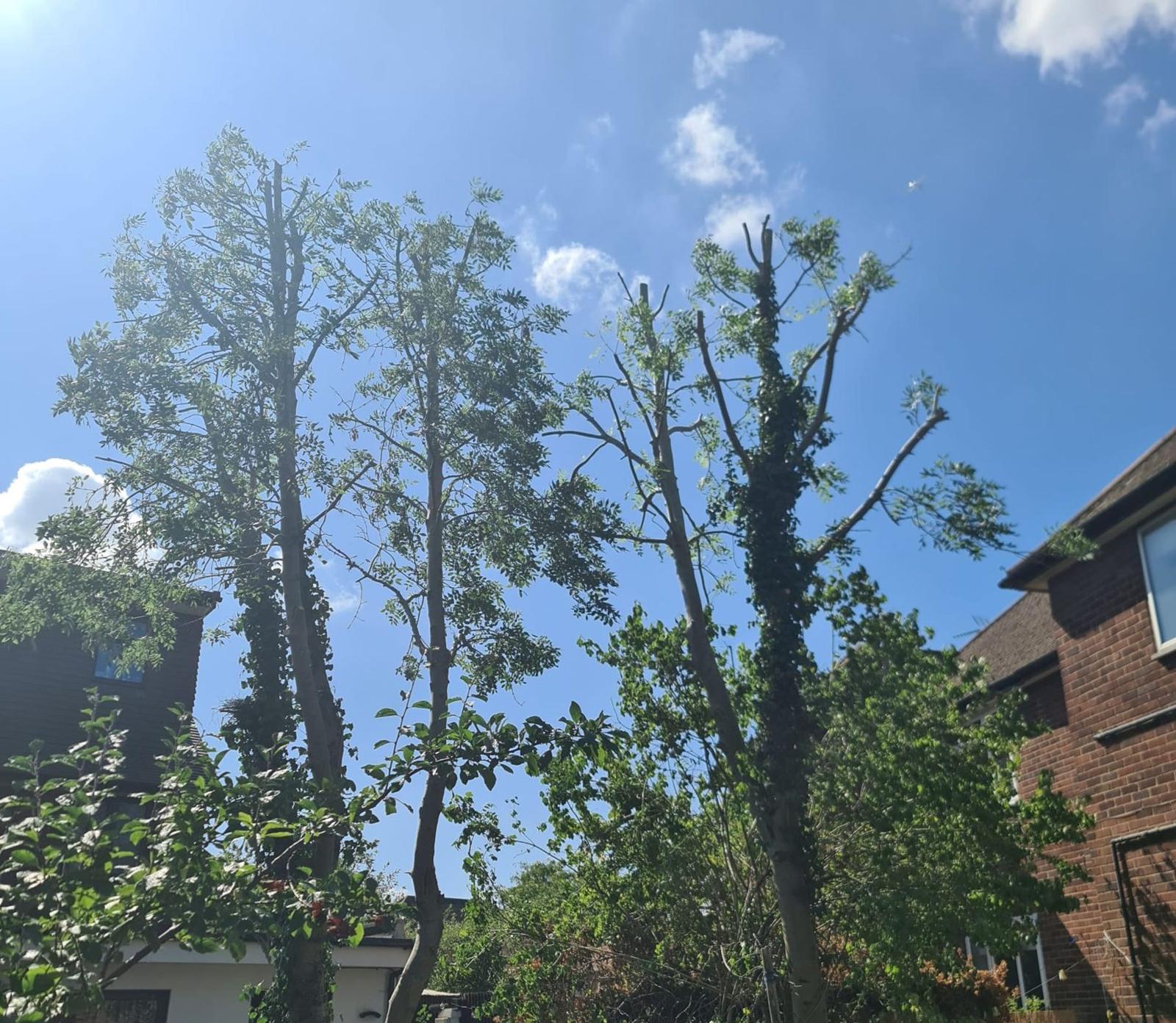
Late autumn to late winter suits most trees. Cherries, birches and walnuts break that rule, and nesting birds come first.
For most deciduous trees, the best time to prune is when they're dormant, from late autumn through to late winter. The leaves are off, so you can see the structure, and the tree is less stressed by the cuts.
Why winter works
- You can see every branch and spot crossing or damaged limbs.
- Fewer fungal spores are in the air, so wounds are less likely to become infected.
- Birds aren't nesting, which matters by law as well as for the birds.
Trees that break the rule
Cherries, plums and other stone fruit
Prune these in summer, once they've finished fruiting. Winter cuts leave them open to silver leaf and bacterial canker.
Birch, maple and walnut
These trees bleed sap heavily if cut in late winter and early spring. Prune them in late summer or autumn, or in deep midwinter when they're fully dormant.
Evergreens and conifers
Light trimming in late spring or late summer suits most. Remember that leylandii and many other conifers won't regrow from old brown wood.
Nesting season
The main bird nesting season runs from around March to August. Under the Wildlife and Countryside Act 1981, it's an offence to damage or destroy an active nest. We check trees and hedges before we cut and work around any nests we find.
Dangerous trees don't wait for the right season. If a limb is cracked, hanging or over a path, call us whatever the month.
How much to take off
As a rule we don't remove more than a quarter to a third of the live crown in one go. Heavy cuts trigger a flush of weak regrowth and can stress the tree. A staged reduction over a couple of years gives a better result.
Need a hand? Call us on 020 3897 0446 or send us a message for free advice.